


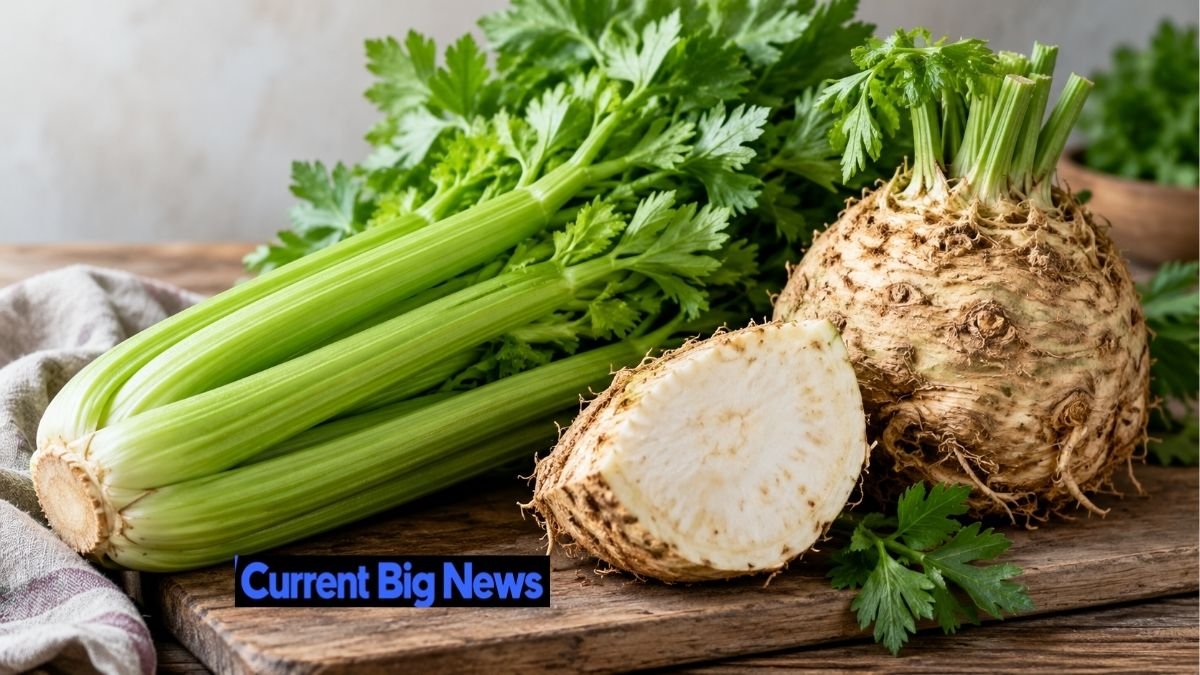
Pravi celer may sound like the name of a rare vegetable, specialist cultivar, or new wellness product. The meaning is much simpler. In Croatian and related South Slavic usage, “pravi” can mean real, true, or genuine, while “celer” means celery. The plant behind the term is generally the familiar celery species Apium graveolens, not a newly discovered botanical category.
For readers searching pravi celer, the most useful approach is to separate language from botany. Celery appears in several cultivated forms, including types grown for crisp stalks, aromatic leaves, or the swollen base known as celeriac. Understanding those differences explains why recipes and photographs using the same broad plant name can look surprisingly different.
What Does Pravi Celer Actually Mean?
The simplest English reading of pravi celer is “true celery” or “real celery.” Croatian-English language resources translate “pravi” as real, true, or genuine, while the Croatian Encyclopedia identifies celer as Apium graveolens.
That wording should not be mistaken for an official scientific name. Kew Science recognizes Apium graveolens L. as an accepted species in the Apiaceae family and describes a native range stretching from Macaronesia and North Africa through Europe to the western Himalaya.
The distinction matters because unfamiliar foreign-language food terms sometimes become exaggerated online claims. A phrase meaning “real celery” does not prove that the plant is a premium cultivar, medicinal strain, or nutritionally superior vegetable. An identifiable cultivar or reliable botanical description should support a specific claim about a variety.
Why the Name Causes Confusion
Celery isn’t limited to the long green stalks common in British supermarkets. The Croatian Encyclopedia distinguishes cultivated forms valued for enlarged lower parts, thick leaf stalks, or leaves. That helps explain why one regional recipe may call for a round, rough-looking celeriac while another expects crisp stalks.
The language can therefore be less mysterious than the food form. In practice, what matters is identifying which part of the plant is intended and how the recipe uses it.
The Botany Behind Pravi Celer
Botanically, the term is best understood through Apium graveolens. Kew lists the plant as an accepted species and describes it as a biennial growing mainly in temperate regions. In the kitchen, however, the cultivated form matters more than strict taxonomy.
Stalk celery is selected for crisp, fleshy leaf stalks and is widely eaten raw or cooked. Leaf celery is valued for aromatic foliage that seasons soups, broths, sauces, and other savory dishes. Celeriac is selected for its enlarged lower stem area. The Royal Horticultural Society explains that the edible part of celeriac looks like a rounded root but is actually a swollen stem.
These forms have a shared celery character, yet they behave differently in food. Celeriac is dense and works well roasted or mashed. Stalk celery brings crunch and moisture. Leaves contribute a stronger herbal aroma. Treating them as identical can change a dish’s texture and flavor.
How to Tell Which Type a Recipe Needs
Read the preparation instructions before buying anything. If a recipe asks you to grate a pale, round vegetable, it probably means celeriac. If it calls for chopped green stems, stalk celery is the likely choice. If you need only a small amount of finely chopped leaves, the goal is probably aroma rather than bulk.
This simple check prevents a common mistake: assuming that every use of the word celery refers to supermarket stalks. Regional cooking traditions often use more of the plant than English-language recipes do.
How Pravi Celer Is Used in Cooking
Celery is useful because its different forms can play very different roles. Raw stalks add crunch to salads and snack plates. Finely chopped celery can form part of the aromatic base of soups, sauces, stocks, braises, and stews. Leaves can be used like a strongly flavored herb, while celeriac can become the central vegetable in a meal.
The RHS describes celery as a classic salad vegetable that can also be cooked, made into soup, or added to stews. It also notes that celeriac can be grated raw, cooked and mashed, added to soups and stews, sliced, or roasted.
Freshness matters. Good stalk celery should feel firm rather than limp, with leaves that are not badly wilted. Celeriac naturally has a rough exterior, so appearance alone is not a useful quality test; firmness and weight are more helpful when choosing one.
Can the Leaves Be Used?
Yes. Celery leaves are edible and can add a pronounced celery flavor to soups, stocks, sauces, dressings, and savory dishes. Because the leaves can taste more intense than the stalks, smaller amounts are often enough.
Using leaves also reduces kitchen waste. Wash them well, chop as needed, and add them according to the flavor strength you want.
Nutrition Without the Wellness Hype
Pravi celer is best treated as an ordinary vegetable rather than a miracle food. The RHS notes celery’s high water content and describes it as containing fiber, antioxidants, and nutrients. Its real dietary value comes from adding vegetable intake, texture, flavor, and variety to meals.
Claims that celery alone “detoxes” the body, cures disease, or produces dramatic health changes go beyond what can responsibly be concluded from the vegetable’s normal nutritional profile. Food can support an overall eating pattern, but a single ingredient should not be presented as a medical treatment.
Whole celery and celery juice are also not identical forms of food. Juicing changes the physical structure and can remove much of the fibrous material, depending on the method. That does not make the juice automatically bad, but it is misleading to describe it as nutritionally identical to eating the whole vegetable.
Growing Pravi Celer at Home
Growing celery requires more attention than many easy garden vegetables. The RHS says cultivated celery comes from a wild plant associated with boggy riversides and marshy ground, which helps explain why the crop prefers moisture-retentive soil and steady access to water.
Celery has a long growing season and needs warmth for germination. The RHS recommends indoor sowing before transplanting and warns that exposing young plants to low temperatures can encourage premature flowering, or bolting.
Consistent moisture is especially important. If plants repeatedly dry out, stems may become stringy and more strongly flavored. Traditional celery was sometimes blanched by excluding light from the stems, while modern self-blanching types reduce the labor required.
For home gardeners, the practical lesson is to choose a clearly named variety suited to the local climate and intended use. The phrase alone does not guarantee that seed is rare, traditional, or superior.
Celery Allergy Is an Important Safety Consideration
Pravi celer is a familiar food ingredient, but celery is also a recognized allergen. In the UK, the Food Standards Agency lists celery among the 14 allergens that must be declared in relevant food-labeling situations. Its celery definition includes stalks, leaves, seeds, and celeriac.
That matters because celery can appear in products where it is not visually obvious, including soups, stock cubes, seasoning products, and prepared foods. People with a diagnosed celery allergy should check ingredient information carefully and follow appropriate medical advice rather than relying on appearance.
Common Misunderstandings About Pravi Celer
The first misunderstanding is that the term must describe a separate superfood variety. Reliable botanical sources do not establish a distinct species under that phrase; Apium graveolens is the accepted celery species.
A second mistake is assuming that all celery looks like long supermarket stalks. Cultivated forms can be selected for stalks, leaves, or the swollen base used as celeriac. A third misunderstanding is that the word “real” proves greater nutritional value. It does not. The wording is linguistic and descriptive, not evidence of superior health effects.
A final point concerns celeriac. It is closely related to stalk celery but was selected for a very different edible structure, which is why it has a rounder shape, denser texture, and different culinary uses.
FAQs
What does pravi celer mean in English?
It can be translated approximately as “true celery” or “real celery.” In food and gardening contexts, it points to celery associated with Apium graveolens rather than a verified new species.
Is it different from regular celery?
Not necessarily. The phrase alone does not establish a special cultivar. The practical difference usually comes from whether the plant is a stalk, leaf, or celeriac form.
Is celeriac part of the same celery species?
Yes. Celeriac is a cultivated form of Apium graveolens selected for its enlarged edible base. People commonly roast, mash, grate, or use it in soups and stews.
Can celery leaves be eaten?
Yes. The leaves are edible and can be used as an aromatic ingredient. Their flavor may be stronger than the stalks, so they are often used in smaller amounts.
Is celery an allergen in the UK?
Yes. Celery is one of the 14 allergens covered by relevant UK food-labeling rules, and the category includes stalks, leaves, seeds, and celeriac.
Conclusion
Pravi celer sounds unusual in English, but the underlying subject is straightforward. The phrase is best understood as a reference to “true” or “real” celery, connected with Apium graveolens rather than a newly recognized vegetable. Its real interest comes from the diversity within celery itself: crisp stalks for raw and cooked dishes, aromatic leaves for seasoning, and celeriac for roasting, mashing, soups, and salads.
The most reliable approach is to identify the intended cultivated form, avoid exaggerated health claims, and use the plant for its culinary purpose. Gardeners should focus on moisture, warmth, and a clearly named variety, while people with celery allergies need to remember that seeds, leaves, stalks, and celeriac can all be relevant.