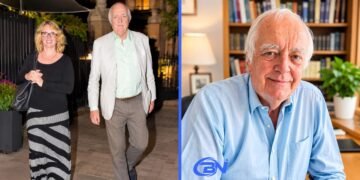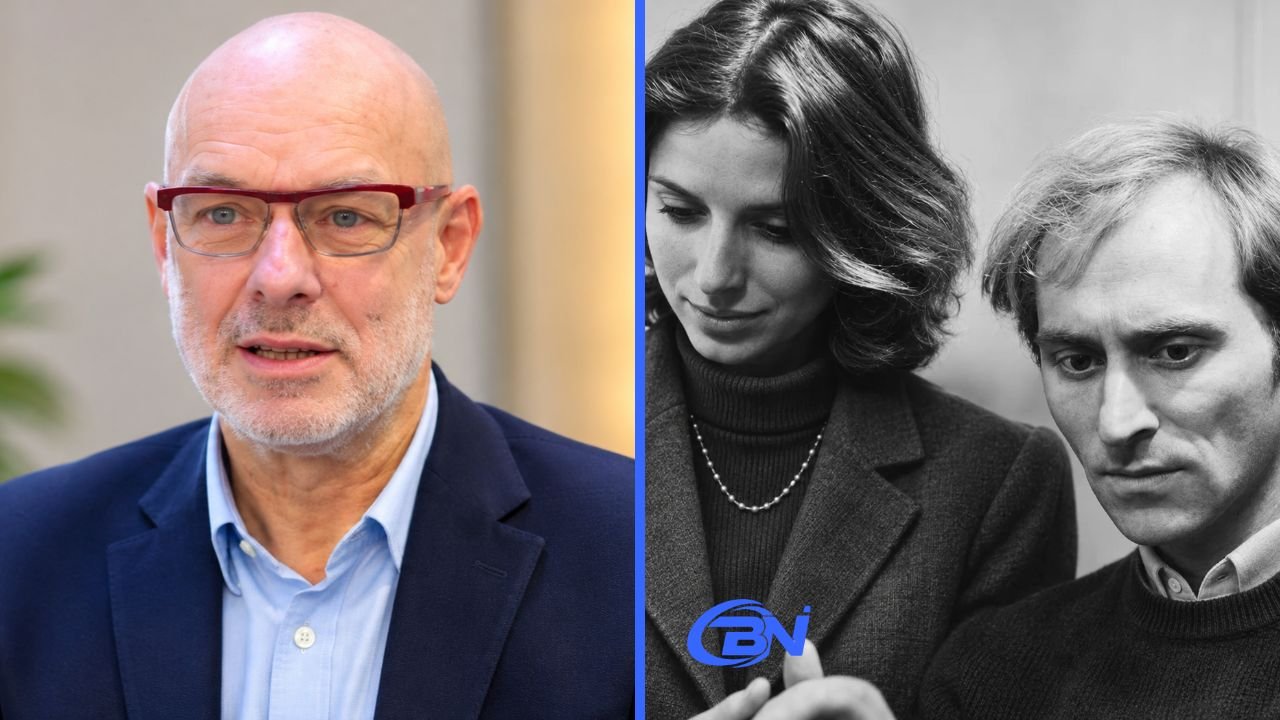
The music executive whose work at EG Records, Opal and independent record labels helped support a generation of experimental artists.
Anthea Norman-Taylor is a British music-industry professional, artist manager, and co-founder of Opal, the organization established with pioneering musician and producer Brian Eno in the early 1980s. She is also widely known as Brian Eno’s wife, having married him in January 1988.
Her contribution to music extends considerably beyond that relationship. Contemporary interviews document her experience in royalties administration, copyright management, artist representation, and record-label development. She helped create a business environment in which experimental musicians could pursue their work without the restrictions often associated with conventional record companies.
Anthea Norman-Taylor career is particularly relevant to the history of Opal Records, which Brian Eno relaunched in October 2026.
This article examines Norman-Taylor’s documented professional background, her work alongside Eno, the development of Opal, and what reliable sources establish about her public life.
Quick Bio
| Field | Details |
|---|---|
| Full Name | Anthea Norman-Taylor |
| Known For | Music management, co-founding Opal and her marriage to Brian Eno |
| Professional Background | Royalties administration, copyright management, music publishing and artist management |
| Former Employer | EG Records |
| Notable Organisation | Opal |
| Spouse | Brian Eno, married January 1988 |
| Notable Music Credit | Executive producer, Music for Films III (1988) |
| Family Connection | Dominic Norman-Taylor, her brother and Opal colleague |
How Anthea Norman-Taylor Began Her Music Career
One of the most informative accounts of Norman-Taylor’s career comes from an interview Mark Prendergast conducted for Sound On Sound, published in January 1989.
In that interview, she explained that she joined EG Records in 1974, initially seeking temporary employment. She had a background in science and an aptitude for mathematics, which helped her secure work involving royalty calculations.
Although she entered the business without previous secretarial experience, her responsibilities expanded as she became familiar with music-industry administration.
She progressed from royalties clerk to copyright manager and eventually became a company director.
These details correct biographies that introduce her career only through her relationship with Brian Eno. By the time Opal was established, Norman-Taylor had already accumulated substantial professional experience in the business operations of a record company.
Anthea Norman-Taylor knowledge covered areas essential to musicians, including royalty administration, copyright interests, and the commercial relationships that support recorded music.
The Creation of Opal and Its Artist-First Approach
Norman-Taylor and Eno began developing their own company after leaving EG Records in the early 1980s.
In her 1989 interview, Norman-Taylor recalled that they decided to establish a company together at the beginning of 1983. Other accounts date Opal’s establishment to 1984, but the sources consistently place its origins in this period.
The central idea was to create an organization built around artists’ needs rather than the conventional priorities of record companies.
This distinction mattered because many of the musicians associated with Eno worked outside established commercial categories.
Artists experimenting with ambient music, unusual instrumentation, minimalism and audiovisual performance did not necessarily fit standard recording-industry expectations.
Opal offered a way to combine artistic independence with professional business management.
Norman-Taylor’s role therefore extended beyond administrative assistance. She helped shape the organization’s philosophy and the practical arrangements that allowed it to operate.
Her Work With Brian Eno and Experimental Musicians
Brian Eno became internationally recognized through Roxy Music, his solo recordings and influential production collaborations.
However, his varied artistic interests also demanded effective management.
Norman-Taylor helped provide that organizational structure through Opal, which became associated with musicians and visual artists including Harold Budd, Jon Hassell, Laraaji, Roger Eno, Michael Brook and Russell Mills.
In a 1990 interview, Eno described Opal Ltd as a management company serving several of these artists.
This professional network demonstrates the wider significance of Norman-Taylor’s work. Opal was not simply an administrative office dedicated to one musician. It connected artists working across experimental music and visual culture.
Anthea Norman-Taylor brother, Dominic Norman-Taylor, also helped run Opal. In Sound On Sound, the siblings discussed the organization’s development and its commitment to providing greater creative freedom.
Their work included managing relationships with artists, supporting releases and coordinating projects that could cross national and artistic boundaries.
Why Anthea Norman-Taylor Was Important to Opal Records
An especially revealing detail appears in the February 1989 continuation of Sound On Sound‘s coverage.
Brian Eno explicitly credited Norman-Taylor with originating the idea of operating Land Records for the UK and Opal Records for international markets.
This account challenges the assumption that Eno created the record labels alone.
Norman-Taylor brought an understanding of the commercial requirements involved in creating an independent route for releasing music.
Her approach also reflected a broader belief that artists should retain meaningful control over their work.
In a November 1988 Music Technology feature about management, she explained that managers were primarily responsible for business affairs and administration rather than directing every aspect of an artist’s career.
For musicians working outside mainstream genres, that distinction could be particularly valuable.
The label’s early catalog included recordings by Roger Eno, Harold Budd, Hugo Largo, and other experimental artists.
Rather than treating unusual music as an obstacle, Opal created a framework to reach listeners.
Her Recording Credits and Music-Industry Contributions
Norman-Taylor’s professional involvement can also be traced through published recording credits.
AllMusic lists her as an executive producer on Music for Films III, released in 1988.
The collection brought together compositions associated with Brian Eno and several musicians from his creative network.
AllMusic also credits Norman-Taylor with liner notes for Opal: Assembly 1 and photography on Roger Eno’s Voices.
These credits support a more detailed understanding of her career than the general description of celebrity spouse.
They demonstrate involvement in recorded-music projects, although individual credits should not be interpreted as proof that she personally composed, performed or produced every musical element.
Her documented responsibilities lay substantially in supporting, managing and organizing the professional activities surrounding creative work.
Anthea Norman-Taylor Role in International Music Collaboration
Opal’s work extended beyond releasing records.
The organization became involved in cultural exchanges during the final years of the Soviet Union, including contacts between musicians in Russia and the West.
In his February 1989 Sound On Sound feature, Mark Prendergast specifically recognized Norman-Taylor’s efforts to develop relationships with Russian musicians, authorities, and media organizations.
The article discussed a satellite television exchange connecting musical figures in Britain and the Soviet Union.
This history adds another dimension to Norman-Taylor’s professional record.
Her work involved not only managing existing relationships but also helping facilitate communication between different artistic communities.
This activity also fed into Opal’s broader interest in international collaboration and unconventional approaches to music.
Anthea Norman-Taylor and Brian Eno’s Marriage
Norman-Taylor married Brian Eno in January 1988, according to a retrospective published by The Independent in May 1998.
Their partnership combined a personal relationship with an established professional collaboration.
In interviews, Eno acknowledged that his wife’s management work helped him pursue several artistic interests simultaneously.
The couple has two daughters, Irial and Darla, whose names have appeared in established published accounts of Eno’s family.
However, Norman-Taylor has not pursued the same public profile as her husband.
Reliable information about her childhood, precise birth date, and other private biographical details is limited. Those gaps should not be filled with assumptions.
Her public significance is more clearly established through her documented music-industry work.
Why Opal Records Returned to Attention in 2026
Opal Records attracted renewed attention in 2026 when Brian Eno announced the label’s relaunch.
In September, DJ Mag reported plans to reissue two recordings: Another Day on Earth and Drawn From Life.
The reissues were scheduled for October 16, 2026.
Eno subsequently discussed the label’s return in an Associated Press interview, explaining his interest in making difficult-to-find recordings available again and considering further releases.
His official website also confirmed the October 2026 relaunch.
For readers researching Norman-Taylor, this development provides an opportunity to understand the history of the organization she helped establish.
The original Opal business and its record-label activities were closely connected, although they did not begin operating in precisely the same form or year.
The 2026 revival concerns a musical enterprise whose early development involved Norman-Taylor’s professional expertise.
No sufficiently verified information establishes that Norman-Taylor personally directed or participated in the 2026 relaunch. Her historical contribution should therefore be distinguished from Eno’s newly reported activities.
What Makes Her Professional Story Significant?
Norman-Taylor’s career illustrates the importance of people whose contributions to music take place outside the recording studio and concert stage.
A musician’s work may depend on contracts, copyright administration, business planning, distribution, and relationships with other creative professionals.
Those responsibilities rarely attract the same recognition as performing or producing an album.
Yet they can influence whether experimental projects are commercially and practically possible.
Norman-Taylor’s progression from royalty administration to a senior management role and the creation of Opal provides a documented example of that work.
Her interviews also reveal a professional philosophy that treated artists as creative decision-makers rather than products requiring constant commercial direction.
This is perhaps the most useful way to understand her place in music history: not simply through her marriage, but through the organizational choices she helped make.
Read this too: Mark Gwynne: Emily Maitlis’ Husband, Career and Wartime Book
FAQs
Who is Anthea Norman-Taylor?
Anthea Norman-Taylor is a music-industry professional and co-founder of Opal, best known for her artist-management work and marriage to Brian Eno.
Is Anthea Norman-Taylor Brian Eno’s wife?
Yes. Established reporting confirms that Anthea Norman-Taylor married Brian Eno in January 1988.
What was her role at EG Records?
She joined EG Records in 1974, initially working with royalties. She subsequently became a copyright manager and company director, according to her 1989 interview.
Did Anthea Norman-Taylor help create Opal Records?
Yes. Anthea Norman-Taylor co-founded the Opal business with Eno and played a key role in developing its record label. Eno credited her with the idea for the separate Land and Opal label structure.
Is Anthea Norman-Taylor involved in the 2026 Opal Records relaunch?
The 2026 relaunch is confirmed, but reliable reporting does not establish whether Norman-Taylor has a direct role in its current operations.
Conclusion
Anthea Norman-Taylor’s contribution to experimental music is supported by a substantial historical record, including her own interviews, contemporary music journalism and recognized recording credits.
From EG Records to Opal, her work helped connect creative ambition with the organizational structures required to sustain it.
Anthea Norman-Taylor marriage to Brian Eno remains an important part of her public biography, but it does not fully explain her professional significance.
With Opal Records receiving renewed attention in 2026, her documented involvement in the organization’s early development offers a valuable perspective on the people and decisions behind influential independent music.