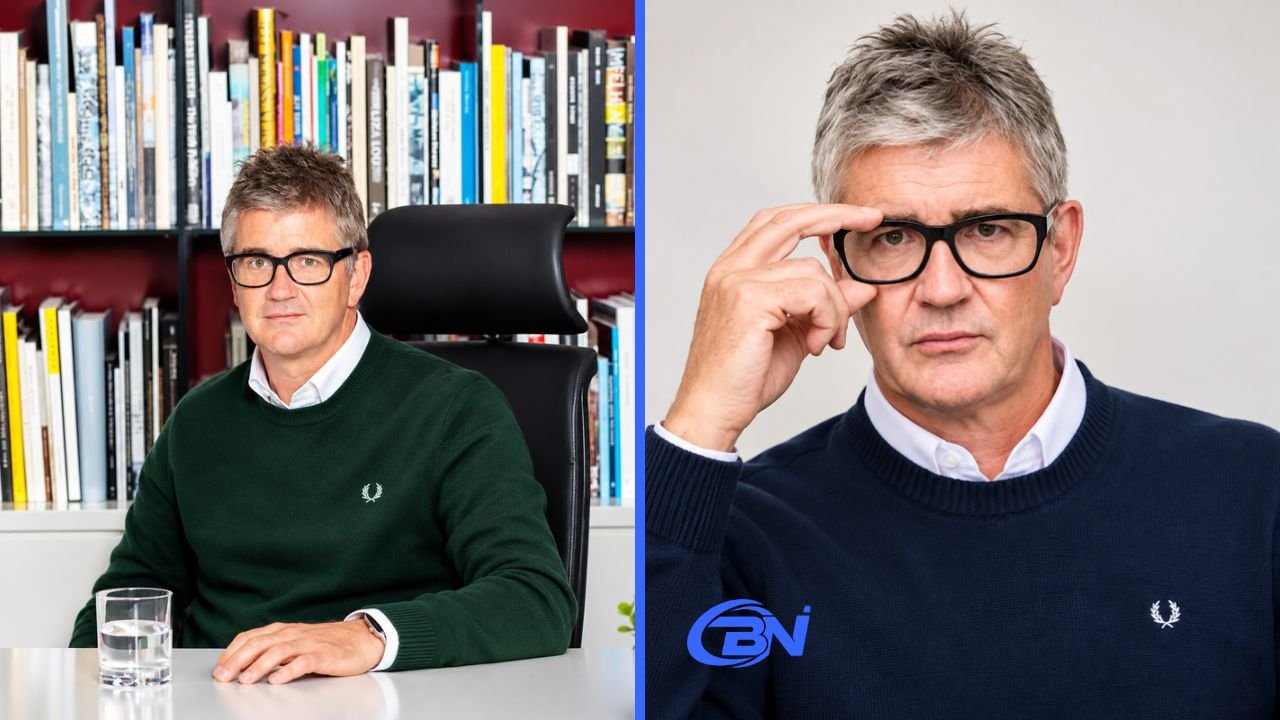
Jay Jopling is a British art dealer and gallerist best known for founding White Cube, the contemporary art gallery established in London in 1993. He became an important figure in the development of the British contemporary art market, particularly through his professional relationships with artists associated with the Young British Artists movement.
Jay Jopling career connects the emergence of experimental British art in the late twentieth century with the international commercial gallery business. Under his leadership, White Cube expanded from a small exhibition space in central London to an international organization operating galleries across Europe, Asia and North America.
This article examines Jopling’s early career, the founding and expansion of White Cube, his relationships with influential contemporary artists, his evolving leadership responsibilities, and his ongoing contribution to the art world.
Quick Bio
| Field | Details |
|---|---|
| Public Name | Jay Jopling |
| Profession | Art dealer and gallerist |
| Nationality | British |
| Birth | June 1963 |
| Education | History of Art, University of Edinburgh |
| Known For | Founder of White Cube |
| Gallery Founded | White Cube, London, 1993 |
| Professional Position | Founder and Chairman of White Cube |
| Industry | Contemporary art and commercial galleries |
| Career Associations | Damien Hirst, Tracey Emin, Marc Quinn and other contemporary artists |
Who Is Jay Jopling?
Jay Jopling is known for connecting contemporary artists with collectors, cultural institutions, and international audiences. As the founder of White Cube, he helped establish a commercial platform for artists whose work was challenging traditional expectations of painting, sculpture and exhibition-making.
His career developed as London became increasingly important in the international contemporary art market. British artists were experimenting with unconventional materials, conceptual approaches and provocative subjects, creating opportunities for galleries willing to support ambitious projects.
Jopling’s professional importance rests not simply on selling artworks but also on facilitating exhibitions, sustaining relationships with artists, and bringing their work to international attention.
Although he is often associated with high-profile cultural events and prominent figures, his main contribution has been in the contemporary art industry.
Early Life, Education and Interest in Art
Jopling was born in 1963 and is the son of Michael Jopling, a former Conservative politician and government minister.
He attended Eton College before studying History of Art at the University of Edinburgh, graduating in 1986.
Jay Jopling university years gave him opportunities to build contacts in the art world. One significant early project involved helping organize a charity auction called New Art, New World, which brought together works donated by established international artists.
The project exposed him to the practical relationships between artists, collectors, galleries, and charitable organizations. It also helped him understand how artworks could attract international attention and financial support.
During the late 1980s, Jopling began developing professional connections with emerging British artists.
Jay Jopling early involvement with Marc Quinn, followed by relationships with other artists including Damien Hirst, provided the foundation for the gallery business he would establish in the following decade.
Founding White Cube in 1993
The defining development in Jopling’s career came in 1993, when he established White Cube in Duke Street, St James’s, London.
The original gallery occupied a small space in an area traditionally associated with established art dealers. Rather than creating a conventional gallery filled with many works, Jopling developed a program centered on focused encounters with contemporary art.
White Cube’s official history records that between 1993 and 2001, the gallery presented 75 exhibitions by 75 different artists at its original Duke Street location.
This approach distinguished the space from galleries built around frequently rotating exhibitions by a small group of artists.
The early program included work by both emerging and established figures. It gave artists opportunities to present experimental ideas within a carefully organized commercial gallery environment.
The gallery’s significance soon extended beyond its physical dimensions. White Cube became closely associated with London’s changing art scene and the international recognition of contemporary British artists.
Jay Jopling and the Young British Artists Movement
Jopling’s professional reputation is particularly connected to the Young British Artists, often abbreviated to YBAs.
The term describes a loose grouping of British artists who attracted substantial attention during the late 1980s and 1990s through unconventional exhibitions, ambitious installations and conceptual approaches.
Among the best-known figures associated with this period are Damien Hirst, Tracey Emin and Marc Quinn.
Working with Damien Hirst
Damien Hirst became one of the movement’s most internationally recognized artists.
Jopling developed a professional relationship with Hirst early in the artist’s career and helped support the production and presentation of ambitious work.
Their collaboration demonstrated how a contemporary art dealer could contribute beyond conventional transactions. Large-scale installations and technically demanding artworks often required financing, planning, specialist production and access to collectors.
Jopling’s involvement helped connect artistic ambition with the practical resources required to realize and exhibit such projects.
Supporting Other Contemporary Artists
His work extended well beyond Hirst.
White Cube’s history includes exhibitions involving artists such as Tracey Emin, Marc Quinn, Antony Gormley, Mona Hatoum and Gary Hume, alongside internationally recognized figures from other generations.
Not all these artists belonged to the same movement or shared the same artistic approach.
That distinction matters because White Cube’s program was never limited exclusively to the Young British Artists. It developed into a broader contemporary gallery with an international exhibition and representation program.
How White Cube Expanded Across London
White Cube’s expansion illustrates how Jopling transformed a relatively small exhibition project into a larger gallery business.
In 2000, the organization opened a space in Hoxton Square, placing it within London’s developing East End arts community.
The gallery subsequently established White Cube Mason’s Yard in 2006, returning to the St James’s area in a purpose-built exhibition space.
Another major development followed in 2011 with the opening of White Cube Bermondsey.
The South London venue offered substantially more exhibition space and the ability to stage ambitious installations and museum-scale presentations.
These locations supported different types of artwork, audiences and exhibitions. They also demonstrated the increasingly important relationship between gallery architecture and contemporary artistic practice.
For Jopling, physical spaces became part of a wider strategy for presenting artworks in settings suited to their scale, materials and conceptual requirements.
International Expansion of White Cube
White Cube’s international development represents another important stage in Jopling’s career.
The gallery opened in Hong Kong in 2012, extending its permanent presence into the Asian art market.
In 2020, White Cube opened a Paris gallery, strengthening its European exhibition program.
Further expansion followed in 2023, when the organization established galleries in Seoul and New York.
The New York opening was particularly significant because the city is a longstanding center of the international art trade. White Cube established its premises at 1002 Madison Avenue, with its inaugural exhibition program including the group presentation Chopped & Screwed.
As of November 2026, White Cube’s official website lists gallery locations in London, Hong Kong, Paris, Seoul and New York.
The organization also reports representing more than 70 international artists and artist estates.
This expansion reflects a broader transformation in the commercial gallery industry, where established galleries increasingly maintain international exhibition programs, artist representation networks and collector relationships.
Jay Jopling’s Leadership Role at White Cube
An important distinction in understanding Jopling’s professional position is the separation between the gallery’s creative leadership and its executive management.
For many years, Jopling was closely identified with both the artistic direction and business development of White Cube.
However, the organization announced a leadership restructuring in January 2024.
Sam Johnson was appointed Chief Executive Officer, while Julie Edelson became Deputy Chief Executive Officer.
Jopling continued as founder and executive chairman, and the changes were intended to give him more opportunity to focus on the gallery’s creative vision.
This means calling Jopling White Cube’s current CEO would be misleading.
The restructuring also illustrates how the organization has developed beyond its original founder-led operating model into an international gallery business with dedicated executive management.
White Cube’s Influence on the Contemporary Art Market
Jopling’s influence is connected to the changing relationship between artists, commercial galleries and the institutions that shape art history.
A gallery can provide financial support, organize exhibitions, coordinate production, document artistic work, and establish connections with private collectors and museums.
These responsibilities are particularly significant when artworks involve unusual materials, substantial installation costs or ambitious presentation requirements.
White Cube developed its reputation partly through its willingness to support such projects.
The gallery also helped establish international audiences for artists working in Britain while exhibiting established international artists in London.
Jopling’s contribution should nevertheless be understood within a wider network of artists, curators, collectors, museums and fellow dealers. The development of contemporary British art was a collective process rather than the achievement of any one individual.
His continuing standing within the industry is reflected in ArtReview’s 2025 Power 100, which placed him at number 91 among influential figures in contemporary art.
Such rankings are editorial assessments rather than objective measures of artistic achievement, but they show his longstanding professional visibility.
Jay Jopling’s Recent Activities in 2026
Jopling remains publicly associated with White Cube’s international program and activities.
One documented development took place during Frieze Week in October 2026, when he helped host an annual fundraising event supporting Hope and Homes for Children and ClientEarth.
According to White Cube’s announcement dated October 16, 2026, the event raised more than £450,000 for the two organizations.
The event demonstrates a strong connection between White Cube’s professional network and its charitable initiatives.
Meanwhile, the gallery’s 2026 activities have included international art-fair participation, major exhibitions and additions to its artist program.
These developments show the organization continuing to operate internationally while maintaining its historical connection with London’s contemporary art community.
Why Jay Jopling Matters in British Art History
Jopling’s career is significant because it spans several distinct phases in the development of the British contemporary art market.
He began working with emerging artists before the Young British Artists became widely recognized. He then established a gallery that helped present their work during a period of increasing international attention.
As White Cube developed, his professional responsibilities expanded from supporting individual projects to overseeing the growth of an international organization.
This progression offers a useful perspective on the role of the modern art dealer.
Successful gallery management requires more than identifying artworks with commercial potential. It involves artistic judgment, long-term professional relationships, exhibition planning, financial organization, and the ability to introduce work to different audiences.
Jopling’s professional history illustrates how these responsibilities can evolve as an artist’s career and a gallery business become more established.
Read this too: Edwin Miller: The Art Dealer and Father of Sienna Miller
FAQs
Who is Jay Jopling?
Jay Jopling is a British art dealer and gallerist best known as the founder and chairman of White Cube, the contemporary art gallery he established in London in 1993.
When did Jay Jopling establish White Cube?
Jay Jopling founded White Cube in 1993. Its original gallery was located in Duke Street, St James’s, London.
Which famous artists has Jay Jopling worked with?
Jay Jopling professional career has been associated with artists including Damien Hirst, Tracey Emin, Marc Quinn and Antony Gormley, among others.
Is Jay Jopling still the CEO of White Cube?
No. White Cube announced Sam Johnson as CEO in January 2024. Jopling remained founder and executive chairman, focusing on the gallery’s creative direction.
Where does White Cube operate internationally?
White Cube maintains gallery locations in London, Hong Kong, Paris, Seoul and New York, according to its official gallery information.
Conclusion
Jay Jopling has played a substantial role in the development of contemporary art dealing in Britain and internationally.
From establishing White Cube in a small London space in 1993 to overseeing its expansion into a global gallery business, his career demonstrates the importance of sustained support for artists, effective exhibition-making and international professional relationships.
Jay Jopling association with the Young British Artists remains central to his public reputation. Still, the broader history of White Cube shows that his work has extended across artistic generations, geographical markets and different forms of contemporary practice.
The continued development of White Cube, together with Jopling’s role as its founder and chairman, offers a lasting example of how an independent gallery can grow into an international cultural and commercial institution.