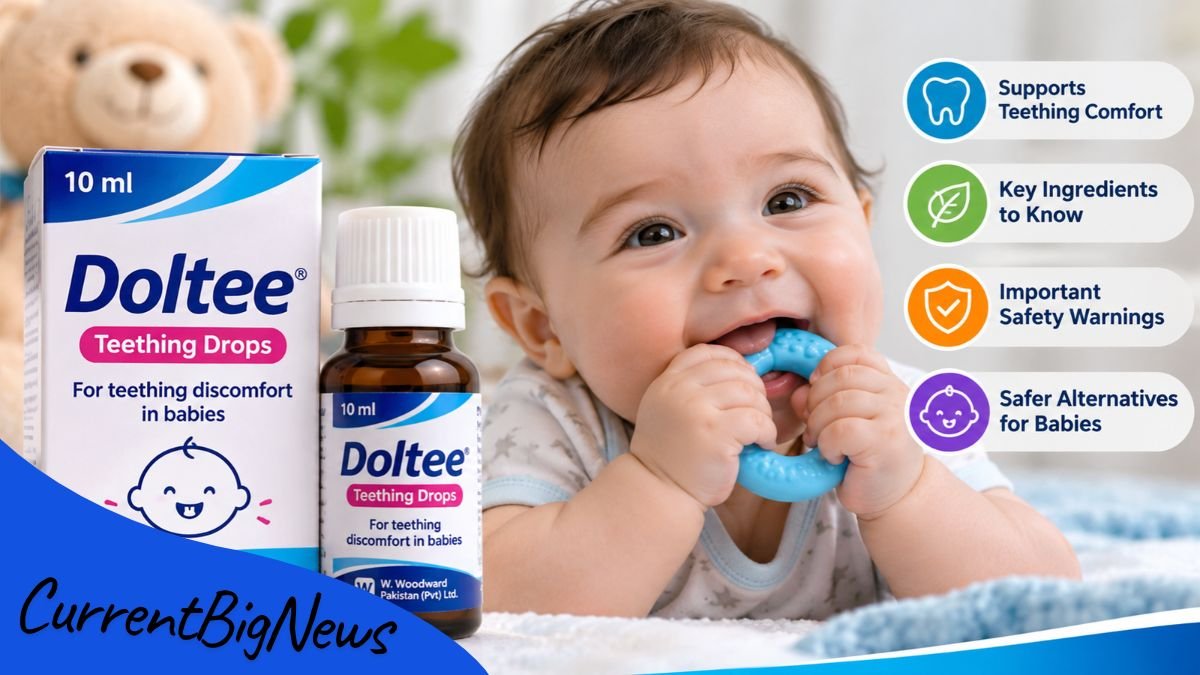
Doltee is a teething preparation marketed in Pakistan for babies experiencing gum discomfort as their first teeth begin to emerge. Parents searching for information about this product usually want to understand its ingredients, intended uses, possible side effects, and whether it is safe for infants. Although teething is a normal part of childhood development, choosing an appropriate remedy requires particular care because babies can be sensitive to medicinal ingredients. Pharmacy listings associate this preparation with W. Woodward Pakistan and identify it as a product containing local anesthetic ingredients. However, current medical guidance raises serious concerns about using lidocaine-containing preparations to treat infant teething pain. Understanding these warnings is essential before considering any medicated teething product.
This article explains the product’s reported composition, intended purpose, important medical warnings, and practical alternatives for managing teething discomfort. It also distinguishes established safety guidance from information that requires verification on the manufacturer’s packaging.
What Is Doltee and What Is Its Intended Purpose?
Doltee is commonly listed by Pakistani pharmacies as a teething preparation supplied in a 10 ml bottle. It is intended to provide temporary relief from discomfort associated with the development of a baby’s first teeth.
The product is associated with W. Woodward Pakistan (Pvt) Ltd, a pharmaceutical company whose name appears in medicine listings and historical trademark records.
Teething occurs when primary teeth gradually move through the gums. During this process, some babies experience tenderness, increased drooling, and a desire to chew on objects.
Although the process is natural, it can temporarily disrupt feeding or sleeping routines. Understandably, parents may search for products that promise quick relief.
However, an important distinction exists between an ordinary teething toy and a medicinal preparation. A teething toy provides physical comfort through gentle pressure, while a preparation containing local anesthetic ingredients temporarily reduces sensation.
This distinction matters because a medicine intended to numb the mouth can create safety concerns when used in infants.
Doltee Ingredients: Understanding the Reported Formula
Several Pakistani pharmacy listings describe Doltee as a combination of medicinal ingredients. Commonly reported components include:
Lignocaine (lidocaine): A local anesthetic that temporarily blocks nerve signals involved in pain sensation.
Methyl salicylate: A salicylate compound used in certain topical pain-relief formulations. Its suitability depends on the preparation and intended patient.
Phenyl carbinol: Another name for benzyl alcohol, a compound that can serve different functions in pharmaceutical formulations.
Menthol: A substance associated with a cooling sensation in certain topical preparations.
These ingredients have been reported by multiple retailers, but online product descriptions are not entirely consistent. Some listings provide different ingredient information, so it is inappropriate to assume every available bottle has an identical composition.
The manufacturer’s current label, approved product information, and advice from a qualified pharmacist should take priority over an online description.
Why the Lignocaine Ingredient Requires Special Attention
Lignocaine is another name for lidocaine, a medicine used by healthcare professionals in various forms of local anesthesia.
Its ability to reduce sensation explains why it has appeared in preparations marketed for discomfort inside the mouth.
However, the American Academy of Pediatrics advises against using lidocaine-containing medications on babies’ gums for teething pain.
The US Food and Drug Administration also warns that topical oral lidocaine preparations can cause serious harm in infants and young children. Severe adverse effects associated with inappropriate exposure include seizures, heart problems, and potentially life-threatening complications.
These warnings are especially relevant when evaluating any infant teething preparation that includes lidocaine.
Does Doltee Provide Effective Relief from Teething Pain?
Doltee is intended to reduce discomfort in tender gums temporarily. However, a product’s intended purpose should not be confused with evidence that its benefits outweigh its risks.
Local anesthetic preparations may temporarily reduce sensation, but the mouth is constantly exposed to saliva. Medicines applied to the gums can be diluted or swallowed, limiting their usefulness and potentially increasing exposure.
The FDA states that topical anesthetic medicines used for teething offer little or no meaningful benefit while presenting potentially serious risks.
No reliable product-specific clinical evidence was established here demonstrating that this preparation is a safe and effective treatment for infant teething.
For this reason, parents should not assume that its appearance in a pharmacy listing means it is suitable for babies.
The safest starting point is generally non-medicinal comfort, rather than attempting to numb an infant’s gums.
Important Safety Concerns and Possible Side Effects
Before considering Doltee for a baby, caregivers should understand that the risks associated with medicinal teething preparations depend on their ingredients, concentrations, application method, and the child’s age.
Lidocaine-containing oral preparations are particularly concerning because excessive exposure or accidental swallowing can cause serious reactions.
Potential warning signs of an adverse reaction may include unusual sleepiness, breathing difficulty, seizures, or sudden changes in responsiveness. These symptoms require immediate emergency medical attention.
Allergic reactions to ingredients are another possible concern with medicines in general. Symptoms such as facial swelling, widespread rash, or difficulty breathing should never be dismissed as ordinary teething.
It is also important to distinguish a medication-related reaction from normal teething symptoms.
Increased drooling, mild irritability, and chewing are commonly associated with emerging teeth. They are not, by themselves, evidence that a medicine has caused a side effect.
Why Parents Should Avoid Self-Determining the Dosage
A 10 ml bottle size does not indicate a suitable dose for an infant.
Appropriate medication use requires verified information about the active ingredients, their concentrations, the child’s age, and relevant medical guidance.
Because of the established warnings surrounding lidocaine-containing teething treatments, caregivers should not experiment with the number of drops or frequency of application.
If a child has already swallowed an uncertain quantity or develops concerning symptoms after exposure, seek urgent medical or poison-control advice. Take the original packaging so healthcare professionals can identify the preparation.
Recognizing Normal Symptoms of Baby Teething
Understanding normal teething behavior can prevent unnecessary medication use.
According to pediatric guidance, babies commonly begin developing their first visible teeth around six months of age, although the timing varies considerably.
The lower front teeth often emerge first. Some children experience noticeable discomfort, while others develop teeth with relatively few symptoms.
Typical signs include tender gums, increased drooling, a desire to bite or chew, and mild fussiness.
Changes in appetite or sleep may also occur around the same period, but these symptoms can have other explanations.
High fever, persistent diarrhea, severe crying, or significant illness should not automatically be attributed to teething.
A child with these symptoms may have an infection or another condition that needs assessment.
Recognizing the difference between ordinary teething and illness helps parents avoid delaying necessary medical care.
Safer Alternatives to Doltee for Teething Discomfort
Parents researching Doltee should also consider the non-medicinal methods recommended by established pediatric authorities.
One effective approach is gentle gum massage. A caregiver can wash their hands thoroughly and use a clean finger to apply light pressure to the baby’s tender gums.
The pressure may provide temporary comfort without introducing medicinal ingredients.
A firm, age-appropriate teething ring is another useful option. Cooling the ring in a refrigerator may help soothe sore gums.
However, do not freeze teething rings, as extremely cold or hard surfaces can injure delicate gum tissue.
Babies must be supervised while using teething products. Items that can break apart or create choking hazards should be avoided.
A clean, cool, damp washcloth may also provide comfort when offered appropriately under close supervision.
Extra cuddling, reassurance, and gentle distraction can help a baby experiencing temporary irritability.
Caregivers should avoid amber teething necklaces and similar jewelry because of choking and strangulation risks.
Alcohol-based home remedies and unverified herbal or homeopathic teething products are also unsuitable choices.
These simple approaches are often sufficient because teething discomfort is usually temporary and does not necessarily require medication.
When Is Medical Treatment Necessary?
Most babies can be comforted during teething without medicated gum preparations.
Nevertheless, some children experience discomfort that makes feeding or resting difficult.
In these circumstances, a pediatrician may recommend an appropriate oral pain reliever after considering the child’s age, weight, medical history, and symptoms.
Paracetamol and ibuprofen are sometimes used for pediatric pain relief, but eligibility, formulation, dosage, and local recommendations vary.
Caregivers should obtain professional advice rather than estimating a dose or combining different medicines independently.
Persistent discomfort also deserves attention because not every mouth problem in an infant is caused by teething.
Mouth ulcers, infections, oral thrush, and other conditions may require different treatment.
A medical assessment is particularly important if a baby has a significant fever, refuses fluids, appears dehydrated, or becomes unusually drowsy.
Price, Availability and Packaging Information
Doltee has appeared in several Pakistani online pharmacy catalogs, generally as a 10 ml teething preparation.
Published retail prices differ considerably between sellers, and some listings indicate limited availability or temporarily unavailable stock.
A retailer’s displayed price should therefore not be treated as a confirmed nationwide price.
Likewise, a pharmacy listing does not independently establish current regulatory approval, product authenticity, or safety for infant use.
Parents should check the packaging for its manufacturer, ingredient concentrations, expiry date, batch number, and official instructions.
If the label is incomplete, damaged, or inconsistent with the seller’s description, a pharmacist should clarify the issue before any use is considered.
Frequently Asked Questions
1. What is Doltee used for?
Doltee is marketed in Pakistan as a teething preparation intended to relieve discomfort associated with emerging baby teeth. However, its reported lidocaine content raises important safety concerns, and caregivers should not assume it is suitable for infants.
2. Is Doltee safe for babies?
Its safety cannot be determined from marketing or availability alone. Major pediatric authorities advise against using lidocaine-containing oral preparations for infant teething pain because of potentially serious adverse effects.
3. What ingredients are found in Doltee teething drops?
Several pharmacy listings report lignocaine, methyl salicylate, phenyl carbinol, and menthol. Because online descriptions differ, the exact composition must be checked against authentic manufacturer information.
4. Can teething drops cause side effects?
Medicated teething preparations can cause adverse reactions, depending on their ingredients and how much is absorbed or swallowed. Lidocaine-containing products are associated with particularly serious risks in young children, including seizures and heart complications.
5. What can parents use instead of medicated teething drops?
Gentle gum massage, refrigerated solid teething rings, and comforting a baby are commonly recommended alternatives. If discomfort is severe or persistent, a pediatrician can assess whether further treatment is appropriate.
Conclusion
Doltee is a recognized name in Pakistani pharmacy listings for teething drops associated with W. Woodward Pakistan. Although the preparation has been marketed for infant gum discomfort, its reported ingredients require careful consideration.
The most significant concern is lignocaine, also known as lidocaine. Established medical authorities advise against using lidocaine-containing medicines for infant teething because the potential risks can be serious and the benefits are limited.
Parents should verify product information rather than relying exclusively on retail descriptions or traditional familiarity with a brand.
For most babies, gentle gum massage, appropriately chilled teething rings, and reassurance provide safer ways to manage temporary discomfort. Whenever symptoms are unusual, persistent, or severe, professional medical advice is more appropriate than self-medicating an infant.