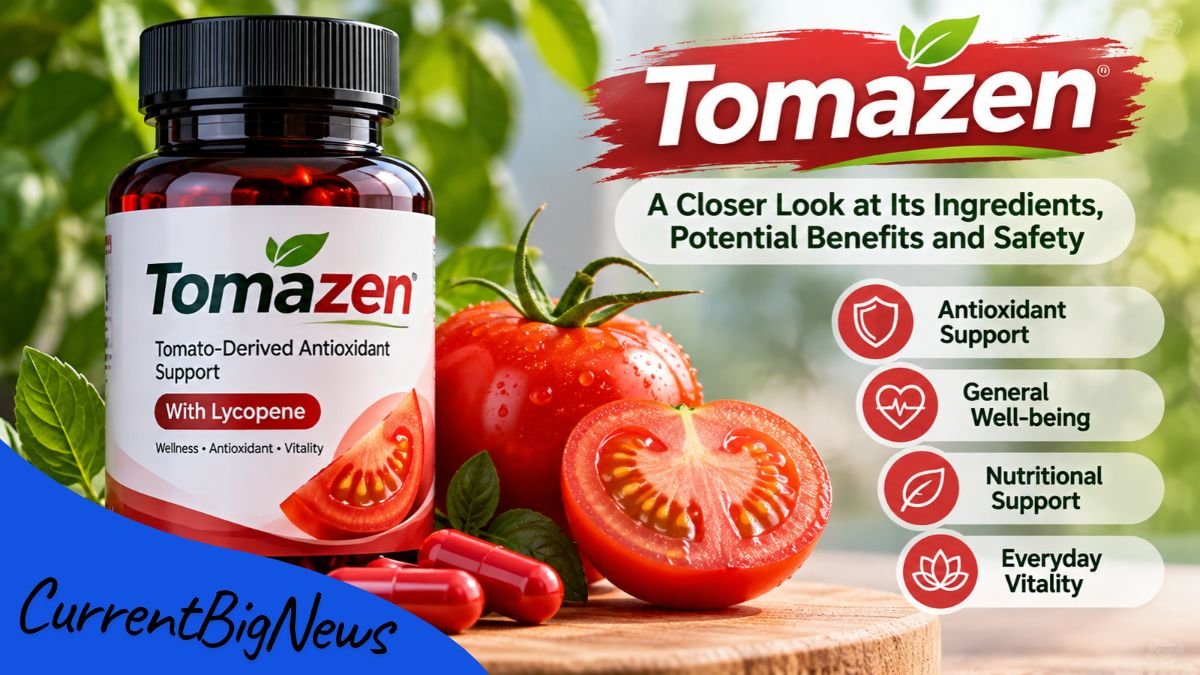
Tomazen is an unfamiliar term that has appeared in online discussions about wellness, nutritional supplements, and natural ingredients. Some websites associate it with tomato-derived antioxidants, while others describe broader formulations containing vitamins, minerals, and botanical extracts. These differing explanations have created uncertainty about what the name actually represents.
The key point is that Tomazen has no clearly established scientific definition or universally verified formulation. Available information does not establish it as a single recognized medicine, nutritional compound, or standardized supplement.
Understanding this distinction is essential before accepting claims about its benefits or purchasing something marketed under the name. This article examines the term’s possible meanings, its connection to nutrition, the available scientific evidence, important safety considerations, and the questions consumers should ask before trusting unfamiliar wellness products.
What Is Tomazen?
Tomazen is a term used in various online publications, particularly articles discussing nutritional supplements and general wellness. However, its precise meaning depends on the context. Unlike established nutrients such as vitamin C, magnesium, or lycopene, the name does not identify a consistently defined substance with an internationally recognized composition.
Some descriptions associate it with tomato extracts and antioxidant compounds. Others discuss combinations of botanical ingredients, micronutrients, and substances commonly marketed for general well-being. These explanations should be understood as descriptions appearing in online content rather than verified specifications of one established product.
This distinction matters because consumers may encounter several articles discussing apparently similar benefits and assume they refer to the same formulation. Without a named manufacturer, complete ingredient list, and independently verifiable product information, there is insufficient evidence to make that assumption.
Why Does Tomazen Have Different Definitions?
The uncertainty around Tomazen illustrates how a relatively unfamiliar name can take on several interpretations online. A website might describe it as a nutritional concept, another might associate it with general wellness, and a third might present it as a particular product without providing independently verifiable details.
Repeated descriptions do not automatically establish a scientific fact. Several websites can repeat the same explanation without supplying original evidence, making a term appear more established than it actually is.
A reliable definition should be supported by identifiable documentation, such as an official product label, manufacturer information, recognized scientific terminology, or an authoritative publication.
Until those details are established, the safest approach is to treat the word as an ambiguous name rather than a confirmed scientific category.
Is Tomazen a Nutritional Supplement?
Some online descriptions present Tomazen as a dietary supplement concept involving natural substances associated with everyday health and nutrition. The ingredients mentioned in these descriptions vary, making it difficult to identify a consistent formulation.
A dietary supplement generally contains ingredients intended to supplement a person’s normal diet. Depending on the product, these may include vitamins, minerals, amino acids, plant extracts, or other substances.
However, calling something a supplement does not establish its composition, effectiveness, safety, or legal status.
For a specific product to be evaluated responsibly, consumers need accurate information about the company responsible for it, the quantities of individual ingredients, its intended use, and any relevant safety warnings.
A product name alone is not sufficient evidence of what the product contains.
The Possible Connection Between Tomazen and Lycopene
One explanation in online wellness content links Tomazen to tomatoes and lycopene. Lycopene is a naturally occurring carotenoid responsible for much of the red coloring found in ripe tomatoes and several other fruits.
Unlike the uncertain product terminology, lycopene is a scientifically recognized compound that has been investigated in nutritional research.
Researchers have examined lycopene in relation to antioxidant activity and various health outcomes. Nevertheless, evidence about a nutrient should not be confused with evidence demonstrating that a particular commercial formulation produces measurable benefits.
For example, research involving tomato consumption does not automatically prove that capsules containing tomato extract will have identical effects. Processing methods, ingredient concentrations, individual dietary patterns, and differences between study populations can all influence research findings.
The US National Cancer Institute has also reported that evidence is insufficient to establish lycopene supplements as an effective method of preventing or treating prostate cancer.
Consequently, claims about an unfamiliar wellness formulation cannot be validated simply by mentioning recognized ingredients or scientific research concerning tomatoes.
Other Ingredients Mentioned in Online Descriptions
Some articles associate the name with broader combinations of botanical extracts, vitamins, minerals, and substances commonly used in nutritional products.
Ingredients discussed in this wider context include magnesium, B vitamins, certain plant extracts, and compounds associated with relaxation or general well-being. However, verified information is insufficient to confirm that these substances belong to a single standardized formula.
This matters because individual ingredients can serve different purposes, have different recommended amounts, and carry different safety considerations. Their effects may also depend on the quantities consumed and the presence of other substances.
A formulation containing several ingredients should not be assumed to provide all the benefits associated with each ingredient individually. Combining substances can also introduce additional interactions or safety concerns.
Consumers should therefore avoid treating general ingredient descriptions as evidence of a product’s exact contents.
What Does Scientific Evidence Reveal About Tomazen?
At present, reliable public information is insufficient to establish Tomazen as a clinically validated formulation with a consistent ingredient profile. Without an identifiable formulation, meaningful conclusions about its effectiveness are not possible.
Clinical evidence must relate to a clearly defined substance or product. Researchers need to know precisely what participants received, how much they consumed, how long treatment continued, and which outcomes were measured.
These details allow scientists to compare results and assess whether an intervention produces a meaningful effect.
A marketing description that refers broadly to antioxidants, energy, concentration, or vitality does not provide the same level of evidence.
Why Research on Individual Ingredients Is Not Enough
An important distinction in nutritional science is the difference between evidence about an ingredient and evidence about a finished product.
A manufacturer might discuss published research concerning a recognized vitamin or plant extract. However, that research may have used a different dose, preparation, or combination of ingredients from the formulation being advertised.
The results may also apply only to particular populations or circumstances.
For instance, demonstrating that a nutrient contributes to normal bodily function does not prove that additional supplementation will improve health in people who already obtain sufficient amounts through their diet.
Strong product-specific claims require appropriate evidence about the actual formulation. Where such research is unavailable, statements about effectiveness should remain appropriately cautious.
Potential Benefits and the Limits of Wellness Claims
Online discussions connect Tomazen with broad wellness themes, including antioxidant intake, nutritional support, relaxation, and general vitality. However, these associations should not be interpreted as clinically demonstrated benefits.
Some nutrients support normal physiological processes, and certain supplements can help when someone has a diagnosed deficiency or a specific nutritional need.
That does not mean every supplement marketed for general health provides additional benefits to everyone.
The human body relies on complex interactions among nutrition, sleep, physical activity, genetics, existing medical conditions, and environmental factors. Without proper investigation, improvements in well-being cannot be reliably attributed to one ingredient.
Claims involving increased energy, improved concentration, enhanced immunity, or reduced stress should therefore be evaluated individually rather than accepted because a formulation contains natural ingredients.
Consumers should be particularly cautious when advertising promises rapid improvements, guaranteed outcomes, or benefits across numerous unrelated health conditions.
Is Tomazen Safe to Use?
You can’t determine Tomazen’s safety without identifying a specific formulation and understanding its ingredients, quantities, manufacturing standards, and intended users.
The word natural is frequently used in supplement advertising, but it does not guarantee that a substance is harmless.
Botanical products and concentrated nutrients can cause unwanted effects. Some may interact with prescription medicines, while excessive intake of certain vitamins or minerals can create health risks.
People who are pregnant, breastfeeding, managing long-term medical conditions, or taking regular medication may need additional professional guidance before using unfamiliar supplements.
It is also important to distinguish safety from effectiveness. A supplement might be tolerated by many users without having strong evidence supporting its advertised benefits.
Understanding Product Labels and Quality Information
A credible supplement label should identify the responsible business and provide enough information for consumers to understand what they are purchasing.
Important details include ingredient names, quantities, serving instructions, relevant warnings, and appropriate manufacturer or distributor information.
Consumers should also consider whether a seller provides clear contact details, credible quality documentation, and realistic descriptions of the product’s intended purpose.
Independent testing can offer additional reassurance about identity, purity, or manufacturing quality when the testing is genuine and relevant.
However, certificates, attractive packaging, and promotional language do not, on their own, demonstrate medical effectiveness.
UK Regulations and Consumer Protection
For readers in the United Kingdom, supplement advertising should be considered in the context of established food and medicines regulations.
Food supplements are generally regulated as foods rather than medicines. Businesses must comply with relevant rules concerning product safety, labeling, and permitted claims.
UK government guidance makes clear that food supplements must not be marketed as products that prevent, treat, or cure medical conditions.
Products presented as medicines may fall under the regulatory responsibilities of the Medicines and Healthcare products Regulatory Agency, depending on their ingredients and the claims made about them.
These protections matter because consumers may encounter advertisements that present ordinary dietary supplements as treatments for serious health problems.
Where a product uses unfamiliar terminology, checking its legal classification and promotional claims becomes especially relevant.
Don’t assume the regulatory status of an unidentified product just because its name appears in online articles.
How to Evaluate Tomazen Before Buying
Anyone considering a product advertised as Tomazen should begin by identifying exactly what is being sold.
The first question concerns the manufacturer. A trustworthy seller should provide enough verifiable information for a consumer to identify the business responsible for the product.
The second question concerns composition. An ingredient list should disclose what the formulation contains and provide suitable quantitative information rather than relying entirely on phrases such as natural blend or advanced formula.
The third question concerns evidence. Consumers should distinguish research on individual ingredients from studies of the finished product.
The fourth concerns safety. Directions, warnings, possible interactions, and relevant restrictions should be reviewed before use.
Finally, consider the quality of promotional claims. Testimonials may describe individual experiences, but they cannot replace controlled scientific evidence.
A sensible purchasing decision should be based on transparent product information, appropriate safety assessment, and realistic expectations, not the number of websites repeating the same claims.
Other Possible Meanings and Online Confusion
The name is not restricted to health-related writing. Online articles have also used it to discuss digital tools, personal names, and broader concepts.
These references do not establish that an officially documented application, technology platform, or organization operates under the same name.
A description of an app, for example, should ideally be supported by an identifiable developer, official product documentation, and an authentic software distribution record.
Similarly, claims that the word refers to a historical figure or recognized philosophy require independent evidence before they can be treated as facts.
Readers should examine the surrounding context rather than assuming that all search results describe one subject.
Why Reliable Information Matters
The uncertainty surrounding unfamiliar wellness terminology highlights a wider problem with online information: repeated claims can create the appearance of authority even when original evidence is missing.
Search engines may display several articles using similar descriptions, but their presence does not necessarily mean the underlying facts have been independently confirmed.
For readers, the most useful approach is to identify the exact subject, distinguish marketing from evidence, and consult authoritative information when health-related decisions are involved.
This approach helps prevent misunderstandings and makes it easier to recognize genuinely useful products and trustworthy research.
FAQs
1. What does Tomazen mean?
Tomazen is an ambiguously defined term that appears in online content, particularly in discussions about wellness and nutritional supplements. Verified information is insufficient to establish a universally accepted scientific or commercial meaning.
2. Is it a medicine or dietary supplement?
Some websites describe it as a supplement-related concept, but that does not confirm the existence or regulatory classification of a specific formulation. A verified product label and responsible manufacturer would be needed to evaluate an actual product.
3. Does it contain tomato extract or lycopene?
Some online descriptions link the term to tomato-derived ingredients and lycopene. However, no standard ingredient list has been reliably established, so the contents of any particular product must be checked independently.
4. Are its advertised health benefits scientifically proven?
Reliable, product-specific evidence is insufficient to establish the advertised benefits of a formulation under this name. Research on individual nutrients cannot automatically demonstrate the effectiveness of an unidentified combination of ingredients.
5. What should consumers check before purchasing?
Consumers should verify the manufacturer, full ingredient list, dosage instructions, safety warnings, and supporting evidence for advertised benefits. Anyone taking medication or managing a health condition should seek professional advice before using an unfamiliar supplement.
Conclusion
Tomazen remains an inconsistently defined term, with online descriptions connecting it to nutritional supplements, tomato-derived antioxidants, and broader wellness formulations. Although some ingredients mentioned in these discussions are recognized substances with established scientific research, that evidence does not establish the safety or effectiveness of a particular product using this name.
The central finding is straightforward: there is not enough verified information to identify a universally standardized formulation or substantiate specific health benefits.
Consumers should therefore examine product labels, investigate manufacturer details, and distinguish legitimate nutritional research from unsupported advertising. For anyone researching unfamiliar wellness terminology, understanding what remains unverified is just as important as understanding what is already known.