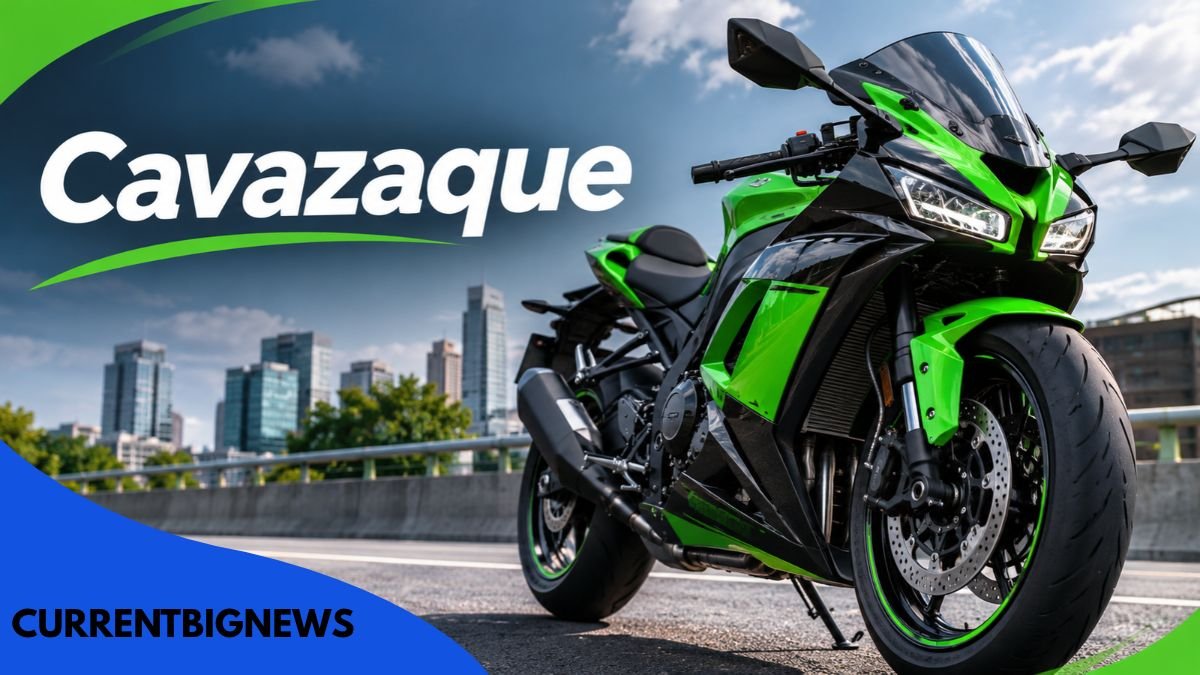
Cavazaque is an unusual expression that appears in online articles about motorcycles, language, culture, and unfamiliar brand names. Its meaning is not firmly established, although several websites connect it with Kawasaki, the Japanese motorcycle manufacturer known for its Ninja, Z, Versys, and Vulcan ranges.
The important distinction is that Kawasaki is a documented manufacturer, while Cavazaque has not been established as an official motorcycle brand, model, or recognized alternative company name. Some online explanations describe the expression as an informal spelling, but its historical and linguistic origins remain uncertain.
Understanding the difference matters when researching motorcycles, checking product information, or interpreting unfamiliar terminology. This article examines the Kawasaki connection, explores competing explanations, identifies common misunderstandings, and explains what available evidence can reasonably establish.
What Does Cavazaque Mean?
Cavazaque has no single, independently established definition. The most common interpretation in motorcycle-related online content links it to Kawasaki, but this association should not be mistaken for an officially recognized name.
Some publications describe the expression as an alternative spelling influenced by pronunciation. Others associate it with motorcycle enthusiasm, internet terminology, or broader cultural ideas.
However, these explanations do not establish a documented linguistic origin or prove that the term has a consistent meaning across different communities.
The clearest distinction is between an expression appearing in online writing and a name formally recognized by a manufacturer or authoritative reference.
A word can circulate online without becoming an official technical term. Equally, a similar-sounding expression does not automatically refer to the same organization or product.
Informal Expressions Versus Official Names
Informal names can emerge through conversation, spelling variations, humor, or cross-language adaptations.
Motorcycle enthusiasts sometimes use shortened names or nicknames when discussing manufacturers and particular models. Such expressions may be understandable within a conversation without appearing in official product documentation.
The difficulty with Cavazaque is that reliable evidence establishing its actual usage history remains limited.
It would therefore be inaccurate to identify a particular individual, community, or country as its confirmed creator.
Why Is Cavazaque Associated With Kawasaki?
The connection comes mainly from the resemblance between the two names and how some websites discuss them.
Kawasaki is an established Japanese engineering and motorcycle brand. Its history can be traced through company publications, manufacturing records, racing activities, and identifiable motorcycles.
By comparison, Cavazaque has no independently verified motorcycle manufacturing history in the reliable material examined.
The similarity between the expressions offers a possible explanation for their association, but it does not prove how or where the unfamiliar spelling originated.
What Kawasaki’s Official History Confirms
Kawasaki Heavy Industries began producing motorcycle engines in 1953. The company subsequently developed several influential motorcycles, including the 500SS Mach III and the Z1.
The Kawasaki Ninja name became part of the manufacturer’s motorcycle identity in 1984 with the GPz900R.
Over the following decades, Kawasaki expanded its product families to cover different riding preferences and uses.
Its recognized motorcycle ranges include:
- Ninja: Sport-oriented motorcycles, including machines intended for everyday road riding and higher-performance applications.
- Z: Naked and street-oriented motorcycles.
- Versys: Motorcycles designed for versatility and touring.
- Vulcan: Cruiser motorcycles emphasizing relaxed riding characteristics.
- KLX and KX: Off-road motorcycle families serving different recreational and competitive purposes.
These product families have documented histories and identifiable model names.
The manufacturer’s published motorcycle history and product information do not establish the unfamiliar expression as another official motorcycle range.
That distinction matters when comparing specifications, checking vehicle paperwork, or ordering replacement components.
Is Cavazaque a Real Motorcycle Brand?
Available reliable information does not establish Cavazaque as an independent motorcycle manufacturer.
No sufficiently verified public record identifies a motorcycle company operating under that exact name, with a documented product range, established manufacturing history, and independently authenticated corporate identity.
This does not prove that nobody has ever used the expression commercially. It means the available evidence is insufficient to support claims that it represents an established manufacturer.
Understanding Motorcycle Model Names
A genuine motorcycle model normally has identifiable manufacturer documentation.
Depending on the market, this may include a model designation, technical specifications, authorized distribution information, owner’s manual, warranty conditions, and vehicle identification details.
Kawasaki motorcycles can be distinguished through their actual model designations.
For example, a Ninja 650 and a Ninja ZX-6R are different motorcycles despite belonging to the same broader sport-oriented family.
An unfamiliar spelling alone cannot establish which motorcycle someone means.
If an advertisement uses an unofficial name alongside a recognized Kawasaki model, the actual manufacturer documentation should determine the motorcycle’s identity.
Why Accurate Product Names Matter
Correct naming is more than spelling.
Motorcycle maintenance and purchasing decisions depend on precise vehicle identification.
Two motorcycles from the same manufacturer may require different replacement parts, servicing procedures, or components.
Using an unclear name can produce misleading search results or make it harder to distinguish compatible products.
For practical purposes, buyers should identify the manufacturer, model, production year, and relevant specifications before deciding to buy.
Does the Expression Have Brazilian or Portuguese Origins?
Some online articles associate Cavazaque with Brazilian Portuguese or describe it as a pronunciation-based adaptation of Kawasaki.
However, a specific Brazilian origin has not been independently established through reliable linguistic research, dated examples, or authenticated historical documentation.
There is a difference between saying a particular spelling could arise from pronunciation and showing it originated in a particular language community.
Establishing that history would require evidence showing how the expression was used and how its meaning developed.
Without such evidence, assigning it a confirmed nationality or linguistic history would be premature.
A Similar Portuguese Word Has a Different Meaning
Another important distinction involves the Portuguese word cazaque.
Unlike the unfamiliar expression discussed here, cazaque has a documented dictionary meaning.
The Portuguese dictionary Priberam defines it in connection with Kazakhstan, its people, and the Kazakh language.
This is a useful example of why similar-looking words should not automatically be treated as interchangeable.
A recognized Portuguese word referring to Kazakhstan is not evidence that a longer, differently spelled expression originated as motorcycle slang.
Understanding the surrounding context remains essential.
Other Interpretations Found Online
Motorcycles are not the only subject associated with Cavazaque.
Various websites have attached additional interpretations to the expression, sometimes presenting it as a lifestyle concept, creative philosophy, cultural movement, fictional destination, or unfamiliar product.
These descriptions differ considerably.
A motorcycle-related interpretation focuses on branding and pronunciation, while lifestyle-oriented explanations may discuss authenticity, creativity, craftsmanship, or personal identity.
Such differences raise an important question: are the authors describing one established subject, or assigning separate meanings to the same unfamiliar word?
At present, independent evidence is insufficient to reconcile these interpretations into a single documented definition.
Why Contradictory Explanations Matter
An established company, historical location, or cultural movement normally leaves records that help readers verify its identity.
For a company, these might include official statements, products, registrations, and documented operations.
For a geographical location, they could include maps, governmental records, or recognized geographical references.
For a cultural movement, historians or researchers might identify its development through dated publications, recorded events, and identifiable participants.
When accounts make substantial claims without this supporting evidence, their reliability becomes difficult to assess.
Detailed descriptions alone do not make an interpretation factual.
Kawasaki Disease Is Not the Same Subject
Another potential source of confusion involves the name, Kawasaki.
Kawasaki disease is a recognized medical condition, entirely separate from the motorcycle manufacturer and from informal automotive terminology.
According to the UK’s National Health Service, Kawasaki disease causes inflammation of blood vessels and mainly affects young children.
Symptoms can include prolonged fever, rash, red eyes, changes to the lips and mouth, and swelling or redness of the hands and feet.
Medical assessment is important because untreated cases can sometimes cause heart complications.
The NHS advises urgent medical assessment when Kawasaki disease is suspected.
The expression Cavazaque should not be treated as an established medical diagnosis or a medically recognized alternative name for the condition.
Anyone searching for health information should use the correct medical terminology and reliable clinical guidance rather than relying on unfamiliar spelling variations.
How to Verify Unfamiliar Motorcycle Names
When an unusual term appears in a motorcycle advertisement, article, or online discussion, the most useful response is to identify what the source actually means.
An unfamiliar name may represent a spelling mistake, an informal expression, a proposed product name, or something unrelated to motorcycles.
The surrounding information often provides more useful evidence than the word alone.
Check Manufacturer Documentation
A recognized manufacturer’s published materials are the appropriate starting point for checking motorcycle models.
For Kawasaki-related searches, useful identifying details include the specific model name, model year, official specifications, and relevant owner’s documentation.
Official documentation can establish whether a particular model actually exists and how the manufacturer describes it.
Examine the Context
Consider where the expression appears.
A casual social media caption mentioning a Ninja motorcycle provides a different context from a business claiming to manufacture an entirely new vehicle.
The first may involve informal wording. The second makes a commercial claim that requires independent verification.
Readers should avoid assuming that both uses have the same meaning.
Check Sellers and Product Information
If money is involved, use extra caution.
A legitimate motorcycle listing should provide enough information to identify the vehicle.
Buyers should verify ownership documents, relevant vehicle identification details, seller credibility, and the exact model before completing a transaction.
An unofficial name should never replace those checks.
Why Do Unfamiliar Words Acquire Multiple Online Meanings?
The internet lets a rarely documented expression appear across numerous publications.
One writer may interpret an unfamiliar word in relation to motorcycles. Another may attach a lifestyle meaning, while a third may describe a fictional concept.
Subsequent articles can repeat these interpretations without identifying original evidence.
Over time, repeated descriptions may appear authoritative simply because they are widely visible.
However, repetition is not independent verification.
A claim’s reliability depends on its supporting evidence, not the number of webpages repeating it.
This distinction matters most when researching unusual brand-like names that lack clear primary documentation.
For readers, it is more useful to identify what is established than to construct an elaborate history from unsupported explanations.
What Remains Unknown About Cavazaque?
Several questions remain unanswered.
No sufficiently documented origin identifies who first introduced the expression, when it entered use, or whether its earliest meaning was connected with motorcycles.
Its alleged association with particular language communities also lacks conclusive independent evidence.
Likewise, the available reliable information does not establish a recognized company, formal motorcycle model, or universally accepted cultural definition under this exact name.
These limitations should not be filled with invented dates, founders, product descriptions, or historical narratives.
The most useful conclusion is narrower: the expression appears in online explanations, often alongside references to Kawasaki, but its precise history and established meaning remain uncertain.
FAQs
1. What is Cavazaque?
Cavazaque is an unfamiliar expression appearing in online articles, particularly those discussing Kawasaki motorcycles. It has no independently established universal definition, and its exact origin remains unverified.
2. Is it the same as Kawasaki?
Not officially. Some online writers associate the expression with the Kawasaki name, but it is not an established official alternative to the Japanese manufacturer’s recognized branding.
3. Is there an official motorcycle under this name?
No independently verified official motorcycle model has been established under this exact name. Buyers should use the correct manufacturer and model designation when researching motorcycles.
4. Does the expression come from Brazil?
Some online explanations propose a Brazilian Portuguese connection—however, reliable historical or linguistic evidence confirming that origin remains insufficient.
5. Can the term refer to something other than motorcycles?
Yes, websites have used it in discussions of lifestyle, culture, and fictional concepts. Those interpretations should not be presented as established historical or commercial identities without independent supporting evidence.
Conclusion
Cavazaque is best understood as an uncertain online expression frequently associated with Kawasaki motorcycles rather than a verified independent manufacturer or established product name.
Kawasaki has a documented engineering history, recognized motorcycle families, and official product information. The alternative expression lacks comparable evidence establishing its origins, formal identity, or consistent definition.
Claims connecting it with particular countries, cultural movements, or unrelated businesses remain difficult to substantiate.
The key lesson is to distinguish familiar associations from confirmed facts. Readers researching motorcycles should rely on official manufacturer names and accurate vehicle information, while those exploring unfamiliar terminology should examine the evidence supporting each explanation. That approach provides a clearer understanding without turning uncertainty into invented history.