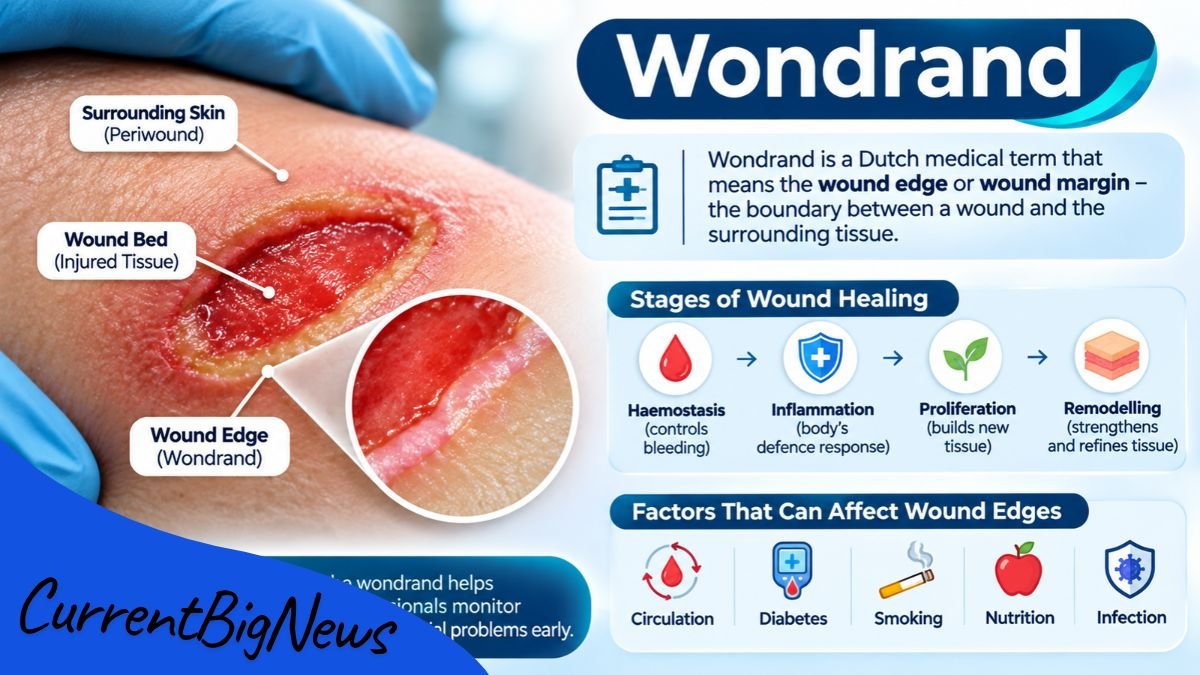
Wondrand is a Dutch medical term that translates into English as wound edge or wound margin. It describes the boundary between a wound and the surrounding tissue, an area that plays an important role in wound assessment and healing. Although the word may appear unfamiliar to English-speaking readers, it represents an established concept in healthcare and clinical documentation.
Healthcare professionals examine wound edges to understand how an injury is progressing, identify potential complications, and assess whether additional care is necessary. The condition of surrounding tissue, moisture levels, and newly developing skin can provide useful information about recovery.
This article explains the meaning of wondrand, its Dutch origins, medical significance, common wound-edge characteristics, and warning signs that may require professional attention.
What Is Wondrand?
The word comes from Dutch and combines two terms: wond, meaning wound, and rand, meaning edge or border. Together, they describe the outer margin of a wound.
The term is documented in Dutch healthcare information standards. The Dutch clinical information model for wounds includes a field called WondRand, which allows healthcare professionals to record the condition of wound margins.
Zorginformatiebouwstenen+1
A wound edge should not be confused with the entire injured area. It refers to a specific part of the wound that professionals assess alongside its depth, size, tissue condition, and surrounding skin.
This distinction is especially useful when reading translated medical documents, nursing assessments, or international wound-care literature.
Why Are Wound Edges Important in Healthcare?
The outer margin of a wound can provide valuable information about the body’s healing response. During recovery, new surface cells may move across the damaged area, helping restore the protective skin barrier.
This process is known as epithelialization. It forms an important part of wound healing, although recovery also involves other biological processes, including inflammation, tissue formation, and remodeling.
Healthcare professionals assess whether wound margins are progressing towards closure or showing characteristics that may interfere with healing.
A wound that appears relatively small at the surface may still involve deeper tissue damage. For this reason, examining the edges alone is not enough to establish its severity.
remedy.bnssg.icb.nhs.uk+1
The Role of Wound Care in Clinical Assessment
Clinical wound assessments typically consider several interconnected characteristics. These include the type of tissue present, signs of inflammation or infection, moisture balance, and the condition of the wound margins.
The established TIME framework helps professionals organize these observations:
Component
Meaning
T – Tissue Condition of the wound tissue
I – Infection or inflammation Potential infection or inflammatory changes
M – Moisture Balance of wound fluid
E – Edge Condition and advancement of wound margins
This framework supports structured assessment rather than relying on a single visible characteristic.
Zorginformatiebouwstenen+1
Common Characteristics of Wound Edges
Not every wound looks the same. Its appearance can depend on the cause of injury, location, depth, duration, and the person’s general health.
Several recognized characteristics help healthcare professionals describe wound margins.
Advancing Wound Edges
Advancing edges occur when new surface tissue develops across the injured area. This may indicate that healing is progressing, particularly when other clinical observations are also favorable.
However, newly developing skin does not guarantee that every underlying healing process is proceeding normally.
Macerated Wound Edges
Maceration describes skin that becomes excessively softened after prolonged exposure to moisture. It may appear pale, white, or wrinkled.
Excessive wound fluid and inadequate moisture management can contribute to this condition. Healthcare professionals may assess whether the dressing and existing care plan are appropriate for the amount of fluid being produced.
Rolled or Thickened Edges
Some wounds develop margins that become thickened or roll inwards. Rolled edges, sometimes described using the clinical term epibole, can interfere with the movement of new surface cells.
These changes may require specialist assessment, particularly when a wound has stopped progressing. Patients should not attempt to cut or remove abnormal wound margins themselves.
East London NHS Foundation Trust+1
Undermined Wound Edges
Undermining occurs when tissue damage extends beneath the visible wound margin. The external opening may not accurately represent the full extent of the affected area.
Assessing undermining requires appropriate clinical expertise. Do not investigate it at home using instruments or other objects.
Wound Healing and the Stages of Wound Healing
Wound recovery is a complex biological process involving several overlapping stages.
Haemostasis
Following an injury, the body begins controlling bleeding through blood vessel responses and clot formation.
Inflammation
The immune system responds to tissue damage and helps remove damaged material. Some local inflammation can occur during normal healing, although worsening symptoms may require medical attention.
Proliferation
During this stage, new tissue forms, blood vessels develop, and surface cells help restore skin coverage. Wound margins are particularly important during epithelialization.
Remodelling
Newly formed tissue gradually reorganizes and strengthens. Depending on the injury, scar development and changes in tissue appearance may continue long after the wound has closed.
Recovery time varies significantly, so there is no universal healing timetable for every injury.
Factors That Can Affect Wound Edge Recovery
Several underlying factors can influence the condition of wound margins and the speed of healing.
Poor circulation can limit the delivery of oxygen and nutrients needed for tissue repair. Diabetes, repeated pressure, smoking, inadequate nutrition, and infection may also interfere with recovery.
Wound location also matters. Injuries exposed to frequent movement, friction, or pressure may present different challenges from those in protected areas.
When evaluating wounds, professionals consider these broader circumstances rather than treating the edge in isolation.
Understanding the underlying cause is especially important for persistent wounds, pressure ulcers, or injuries linked to chronic health conditions.
The Difference Between Wound Edges and Surrounding Skin
Although closely connected, the wound margin and surrounding skin are different areas.
The wound bed is the exposed tissue within the injury. The wound edge forms its outer boundary, while the periwound skin refers to the adjacent skin surrounding the affected area.
Each region can display different characteristics. For example, the wound bed may contain newly developing tissue, while the surrounding skin may become irritated from excessive moisture or contact with dressing materials.
A comprehensive assessment considers all three areas. This helps healthcare professionals identify problems that might otherwise be overlooked when examining only the visible injury.
Gloucestershire Hospitals NHS Trust+1
Recognizing Warning Signs Around a Wound
Changes around wound margins do not always indicate a complication. Nevertheless, worsening symptoms deserve attention.
According to NHS guidance, potential signs of infection include increasing pain, swelling, spreading redness and pus. Fever or feeling generally unwell may also indicate that you need a medical assessment.
People in the UK should seek urgent advice through their GP or NHS 111 when an injury shows signs of infection. Serious injuries, very deep cuts or bleeding that cannot be controlled may require emergency treatment.
NHS+1
Color alone cannot establish whether a wound is healing normally. Symptoms, changes over time and the individual’s medical circumstances must also be considered.
How Healthcare Professionals Document Wounds
Accurate documentation lets healthcare teams compare observations across different stages of treatment.
Clinical records may include wound measurements, tissue characteristics, fluid production, edge condition, and changes in surrounding skin. Consistent terminology supports communication between nurses, doctors and specialist wound-care teams.
Including wound edge assessment in Dutch clinical information standards shows that wondrand is more than an informal expression. It has a recognized purpose within structured healthcare documentation.
The UK also has a Wound Care Information Standard designed to support consistent recording and exchange of wound-care information.
Zorginformatiebouwstenen+1
These systems help professionals maintain continuity when patients receive care from different services.
Is Wondrand a Brand, Website or Medical Treatment?
The established meaning of wondrand is anatomical and descriptive. It is not, by itself, the name of a medical condition, medication, treatment, or healthcare device.
Reliable information reviewed does not establish a particular commercial platform or registered company as the primary meaning of this keyword.
Readers encountering a business or product using the same name should verify its identity separately. A legitimate medical term does not automatically establish the credibility of a commercial service using that terminology.
FAQs
1. What does wondrand mean in English?
It means wound edge or wound margin. The term describes the outer boundary of a wound where damaged tissue meets adjacent tissue.
2. Is wondrand a medical condition?
No. It is a descriptive Dutch healthcare term, not a disease or diagnosis.
3. Why do wound edges sometimes turn white?
Excessive moisture can cause maceration, making skin appear pale and softened. However, appearance alone cannot establish the cause, and persistent changes should be assessed by a professional.
4. Can wound edges indicate healing progress?
Yes. Changes in wound margins can provide useful information about tissue recovery and surface skin formation. Professionals consider these observations alongside other clinical findings.
5. When should someone seek medical advice about a wound?
Seek medical advice if a wound becomes increasingly painful, swollen, produces pus, or fails to heal as expected. Uncontrolled bleeding or serious injuries require emergency assessment.
Conclusion
Wondrand is an established Dutch medical term describing the edge or margin of a wound. Its importance extends beyond translation, as wound margins provide healthcare professionals with valuable information about tissue condition, recovery and potential complications.
Understanding concepts such as epithelialization, maceration, and undermining can help readers better interpret wound-care terminology and clinical documentation. However, no single visual characteristic can reliably determine an injury’s overall condition.
The most important distinction is that wound care describes part of a wound rather than a disease, treatment or commercial product. Recognizing changes around wound edges can support informed conversations with healthcare professionals, while appropriate medical assessment remains essential whenever healing becomes uncertain or complications develop.