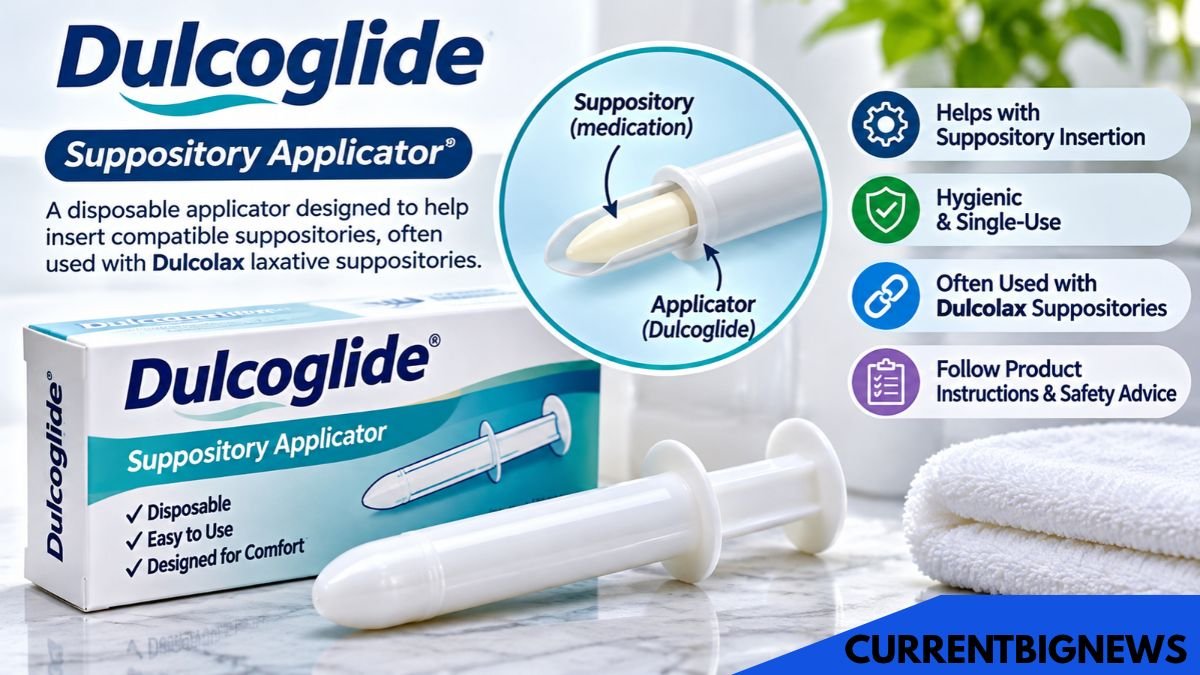
Dulcoglide is a disposable medical applicator designed to help insert compatible suppositories into the rectum. It has been associated with Dulcolax laxative suppositories, which are used to relieve occasional constipation. Although the names are closely related, the applicator and the medicine perform different functions.
For anyone unfamiliar with rectal medication, understanding this distinction matters. The device helps administer a suppository, while the medicine inside produces the therapeutic effect.
People searching for this product often want to know how it works, whether it contains medication, how safely it can be used, and whether it remains available.
This article explains its purpose, design, connection to constipation treatments, documented product instructions, and important precautions. It also examines availability and alternative approaches to managing constipation.
What Is Dulcoglide?
Dulcoglide is a specially designed rectal suppository applicator intended to help administer medications. Product descriptions identify it as a comfort-shaped, disposable device that offers an alternative to inserting a suppository directly with a finger.
A suppository is a solid preparation containing medication that is placed inside the rectum. Depending on its formulation, it softens, melts, or dissolves after insertion, allowing the active ingredient to act.
The applicator provides a mechanical way to position the suppository. It does not contain an active laxative ingredient or independently stimulate bowel movements.
How the Applicator Is Designed
The documented device has a barrel that accommodates a compatible suppository and a plunger that releases it after positioning.
Its design is intended to make administration more manageable, although individual comfort can vary. A shaped applicator does not guarantee painless insertion or eliminate the need for careful handling.
The device has been supplied in individually wrapped, single-use packaging. Certain historical products combined disposable applicators with medicated suppositories, while other listings offered the applicators separately.
The Background and Development of the Product
Dulcoglide has an established commercial history, not an informal term for a general medical accessory.
United States trademark records show that the name was registered in June 2015 for products involving laxatives, suppositories, and suppository applicators. This provides documented evidence of its connection with established pharmaceutical products.
The American trademark registration was canceled in December 2021. However, trademark cancellation does not automatically mean that every related product was withdrawn worldwide.
The product’s history reflects efforts to provide different administration options for rectal medication. Traditional suppository insertion can be straightforward for many users, but an applicator offers another method when the particular medicine and device are compatible.
Dulcoglide vs Dulcolax: Understanding the Difference
The similarity between the two names can cause confusion, especially when people encounter packaging that mentions both products.
Dulcolax is a medicine brand associated with constipation treatments. Its products include formulations containing bisacodyl, a stimulant laxative that encourages bowel activity.
By contrast, Dulcoglide is associated with an applicator used to administer suitable suppositories. The accessory itself does not treat constipation.
What Does Bisacodyl Do?
Bisacodyl stimulates intestinal movement and helps the bowel pass stool. It is available in oral and rectal formulations, although these have different administration methods and times to take effect.
According to NHS guidance, bisacodyl suppositories typically work within approximately 10 to 45 minutes. Individual responses can vary, so users should remain near a toilet after administration.
The applicator does not make the medication stronger or change its prescribed dose. Its purpose is limited to helping deliver the suppository.
Understanding this difference prevents a common mistake: assuming that purchasing the applicator alone provides constipation treatment.
How Does the Dulcoglide Applicator Work?
The device uses a simple mechanical arrangement to hold and release a compatible suppository.
Its operation involves preparing the medication, placing it into the barrel, positioning the device, and using the plunger to release the suppository.
However, exact instructions depend on the product supplied. Users should follow the leaflet provided with their particular medicine and applicator rather than relying entirely on general descriptions.
Preparing the Applicator
Published instructions for the disposable product begin with washing the hands thoroughly using soap and water.
The applicator is then removed from its individual wrapper, and the suppository is unwrapped separately.
The instructions describe placing the blunt end of the compatible suppository into the open barrel without forcing it. The medicine should fit properly according to the manufacturer’s directions.
Before proceeding, the user should confirm that the medication is intended for rectal administration and that the applicator is suitable.
Positioning and Administration
The documented instructions describe lying on one side, keeping the lower leg straight and bending the upper leg toward the chest.
Position the applicator carefully according to the supplied directions. Once correctly positioned, the plunger releases the medication.
The applicator should never be forced into the rectum, as this may cause injury.
If insertion causes significant pain, bleeding, or unusual resistance, stop and seek appropriate medical advice.
Disposal After Use
After the suppository has been released, carefully withdraw the device and discard it.
The documented applicators are intended for single use. Do not wash them for reuse, share them with another person, or flush them down the toilet.
Hands should be washed after disposal.
Potential Benefits and Important Limitations
The main practical advantage of Dulcoglide is that it provides an alternative administration method.
Some people may prefer an applicator because it reduces the need to handle the suppository directly during insertion. Others may find the conventional method simpler.
The device’s usefulness depends on personal comfort, physical ability, correct technique, and compatibility with the medication.
Do not assume everyone needs an applicator. Many suppositories are designed to be inserted directly according to their manufacturer’s instructions.
The accessory also does not replace medical assessment. Someone experiencing painful insertion, persistent bowel problems, or difficulty administering medication may need a different treatment approach.
A pharmacist can help determine whether an applicator is appropriate.
Safety Precautions Before Using Rectal Medication
Medical accessories require careful handling, particularly when used in sensitive areas of the body.
For Dulcoglide, product compatibility, hygiene, and age restrictions matter.
Published UK instructions state that the documented disposable applicator is not suitable for children under 12 years. This restriction applies to that device and should not be confused with the age recommendations for every type of rectal medicine.
Young people should use bisacodyl only with appropriate professional guidance.
Medical Conditions That Require Additional Care
Someone with anal fissures, rectal bleeding, unexplained pain or existing bowel disease should speak to a healthcare professional before using rectal medication.
Bisacodyl may also be unsuitable for people experiencing severe abdominal pain accompanied by nausea or vomiting, suspected bowel obstruction, or significant dehydration.
Pregnant or breastfeeding individuals should obtain medical advice before choosing a constipation treatment.
These precautions concern the underlying medicine and the individual’s health, not simply the applicator.
Why Repeated Laxative Use Can Be Problematic
Stimulant laxatives are generally intended for short-term treatment unless a clinician recommends otherwise.
NHS guidance advises against using bisacodyl every day for more than five days without medical advice. Excessive or prolonged use can contribute to diarrhea, dehydration, and disturbances in electrolyte balance.
An applicator does not reduce these medication-related risks.
Anyone who repeatedly needs laxatives should consider whether an underlying cause of constipation requires investigation.
Is Dulcoglide Still Available?
Availability matters because older pharmacy listings do not always reflect products currently supplied.
Some UK pharmacy websites still list disposable applicators, including three-pack versions. However, listings checked in November 2026 show products marked as unavailable or out of stock.
These observations do not conclusively establish worldwide discontinuation.
Stock information can change, and a product page remaining online does not prove that the item is currently available for purchase.
Before ordering, consumers should confirm availability directly with a pharmacy and check that the product has suitable instructions and intact packaging.
An unfamiliar substitute should not be used simply because it looks similar. Compatibility with the intended suppository must be established first.
Alternative Ways to Manage Constipation
Not everyone with constipation needs rectal medicine or an administration accessory.
Constipation can involve infrequent bowel movements, hard stools, straining, or the feeling that the bowel has not emptied.
For many adults, initial management involves reviewing diet, fluid intake, exercise and toilet habits.
Lifestyle Changes That May Help
Gradually increasing dietary fiber can help improve stool consistency. Whole grains, vegetables, fruit and other fiber-rich foods are commonly recommended.
Adequate fluid intake is also important, particularly when increasing fiber consumption.
Regular physical activity may encourage normal bowel movement. Establishing a consistent toilet routine and avoiding unnecessary delays when the urge occurs can also help.
These measures may take time and are not appropriate substitutes for medical treatment when serious symptoms are present.
Other Types of Laxatives
When lifestyle changes are insufficient, a pharmacist may recommend a suitable medicine.
Bulk-forming laxatives, such as ispaghula husk, increase stool bulk. Osmotic laxatives, including macrogol and lactulose, help retain water in the bowel.
Stimulant preparations such as bisacodyl may be considered in appropriate circumstances, including when other approaches have not provided adequate relief.
Treatment choices depend on symptoms, medical history, existing medication, and individual needs.
When Should Someone Seek Medical Advice?
Constipation is often temporary, but persistent symptoms should not automatically be managed through repeated self-treatment.
Seek medical advice if bowel problems continue despite treatment, occur regularly, or involve a significant change in your usual bowel habits.
Additional warning signs include blood in the stool, unexplained weight loss, ongoing abdominal pain or unusual tiredness.
Severe or sudden abdominal pain, particularly with vomiting or an inability to pass stool or gas, requires urgent assessment.
These symptoms may indicate a condition that needs more than a laxative or suppository.
The most important decision is not which administration device to use, but whether the chosen treatment fits the underlying problem.
FAQs
1. What is Dulcoglide used for?
Dulcoglide is a disposable applicator designed to help insert compatible rectal suppositories. It is associated with certain Dulcolax constipation treatments but does not contain active laxative medication itself.
2. Does the applicator provide immediate constipation relief?
No. The applicator has no medicinal effect on its own. A compatible bisacodyl suppository may produce a bowel movement within approximately 10 to 45 minutes, depending on the person’s response.
3. Can the applicator be used more than once?
No. Published instructions identify the documented applicators as single-use devices. Discard them after administration rather than cleaning and reusing them.
4. Is the device suitable for children?
The documented UK applicator is not suitable for children under 12 years. Suitability for older children and teenagers depends on the particular device, medication, and advice from a doctor or pharmacist.
5. Can the applicator be used with other suppositories?
Some product descriptions indicate compatibility with other suitable suppositories. However, universal compatibility has not been established, so users should check both the applicator instructions and the medication leaflet before use.
Conclusion
Dulcoglide is best understood as a disposable medical accessory designed to help administer compatible rectal suppositories. Its association with Dulcolax has sometimes created confusion, but the applicator and the laxative medicine have clearly different roles.
The accessory provides an alternative insertion method, while ingredients such as bisacodyl treat constipation.
Safe use depends on compatibility, proper handling, hygiene, and careful attention to the supplied instructions. Product availability also requires confirmation because some established pharmacy listings no longer show active stock.
Most importantly, people experiencing persistent constipation or concerning symptoms should seek professional advice rather than repeatedly relying on short-term treatments. Understanding the difference between the medicine and its administration device helps support safer, more informed decisions.